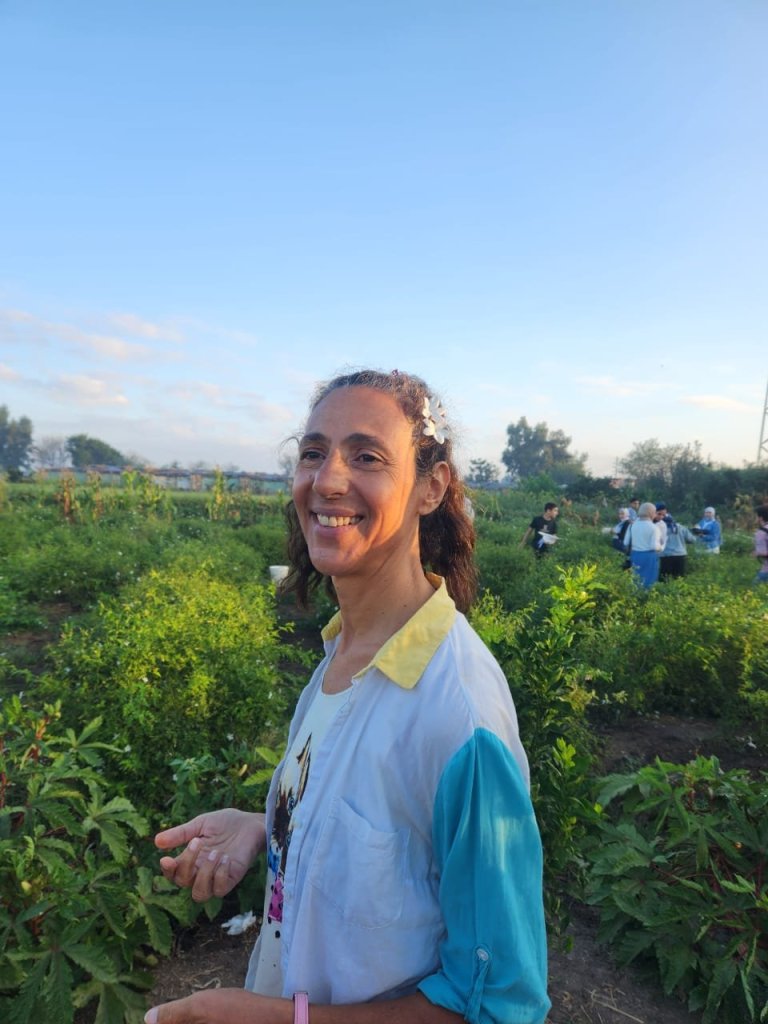
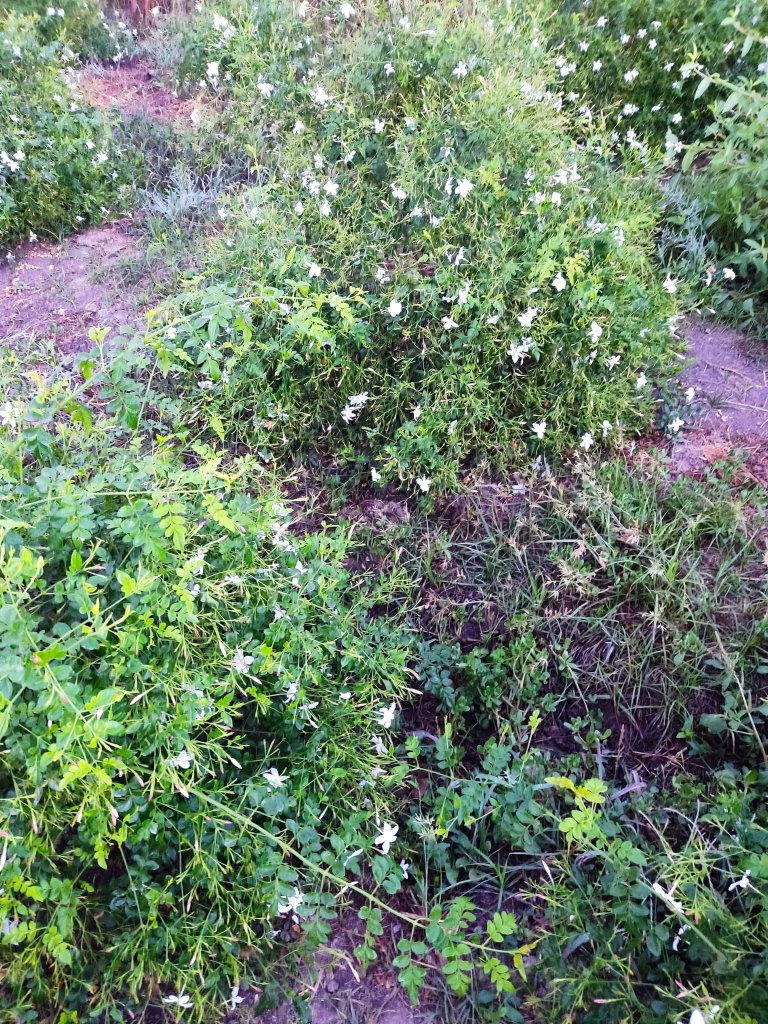
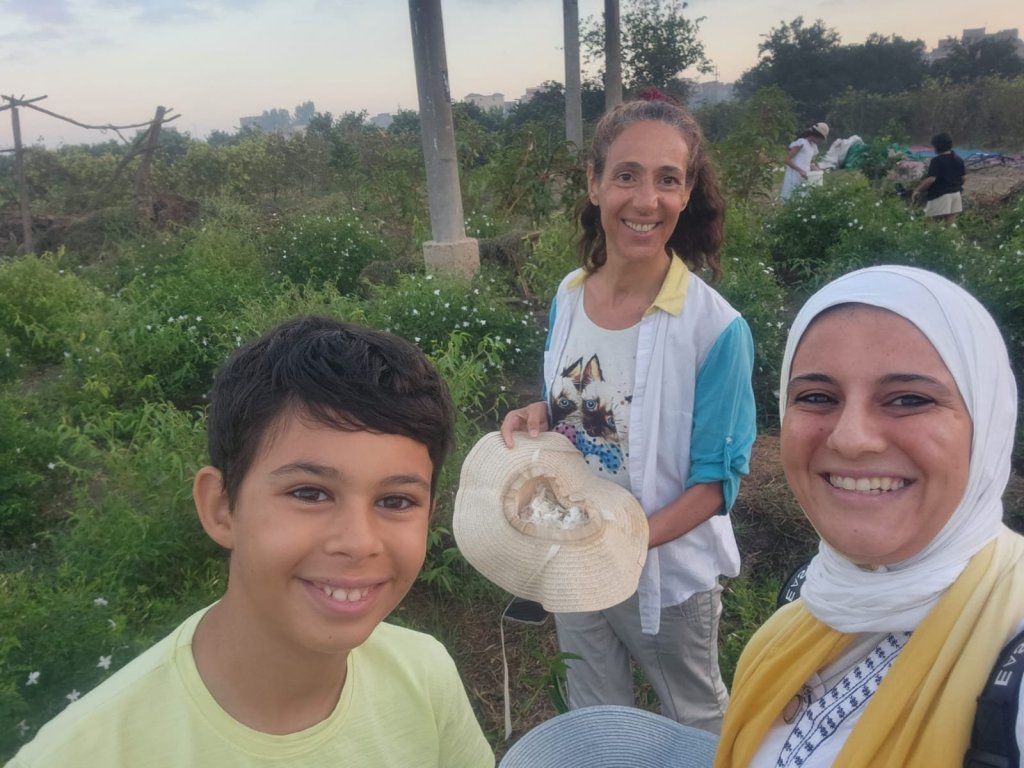
We arrived just as the sun was rising above the horizon. The van parked on a dirt road by an unmarked 1 storey building. There was a a river along which we walked for about 10 minutes. On the other side of the river, fields of green stretched as far as the eyes could see. We turned a corner, that’s when the sweet jasmine fragrance filled the air!
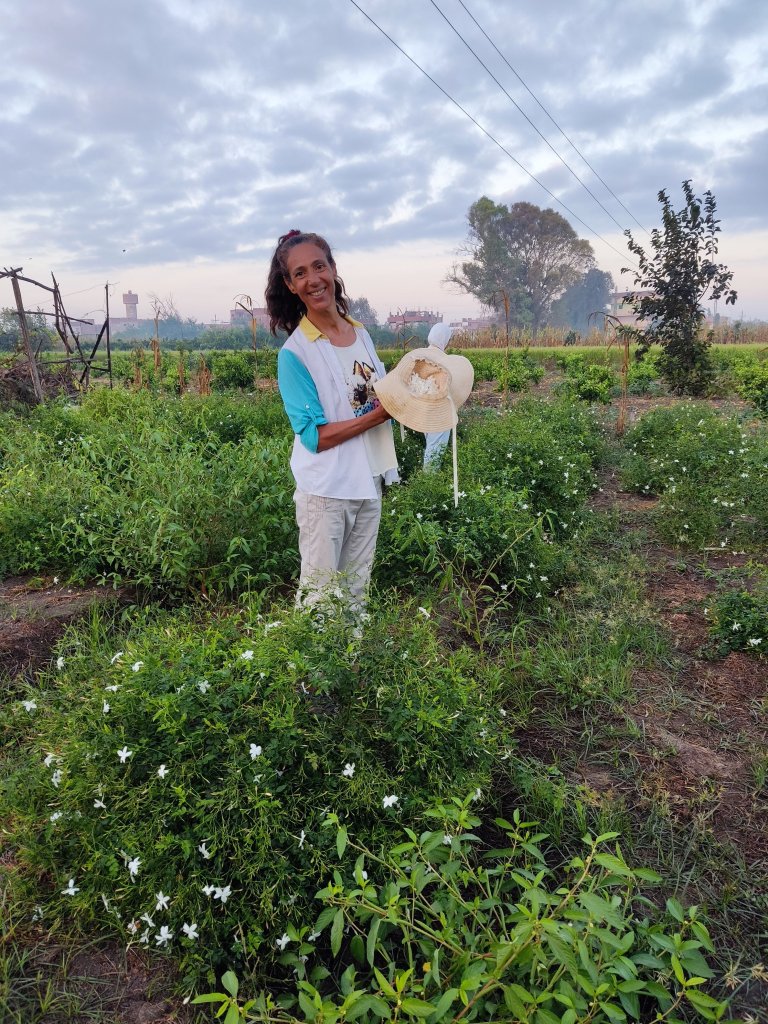
Egypt is the largest producer of jasmine oil and paste (Jasmine Absolute) in the whole world. It used to produce 90% of the world production, now it’s around 60% with India and Morocco producing the rest. Jasmine plantations are concentrated in one area of the Nile Delta called Shubra Baloula (aka Jasmine Village). That’s where we went to participate in the Jasmine harvest and learn about the process.
The white fragrant flowers, from which the Jasmine Absolute is extracted, need to be harvested between midnight and 9am at the latest, before the sun gets too hot. That’s when the flowers are holding the most moisture. Farmers work all night, 6 months a year (June to November) harvesting the fragrant flowers, collecting them in bales that are sent to the factories to be processed the same day. The flowers only last 24 hours so time is of essence.
At the factory, a very flammable solvent, hexane, is added to extract 3 liquids from the flowers: water, oil and wax. The end product, Jasmine Absolute is exported all over the world to be used in the manufacturing of perfumes, beauty products and medicines. The Jasmine Absolute goes through fractionation to separate its different components before it is used, that’s not done in Egypt.
It takes a 1000 kilograms (1 ton) of jasmine flowers to produce 1.5 kilos of Absolute.
The Jasmine story is not all pretty and fragrant. There’s also exploitation, disease and abuse.
Commercial jasmine oil has many health benefits that we enjoy in various daily use products and medicines. However the crude Jasmine oil is toxic, like crude petroleum, and has sedative properties. The farmers work in the fields all night collecting flowers using flashlights. Eventually their respiratory and nervous systems as well as their eyesight suffer from long exposure to the scent, even though they stop smelling it after a while. The young ones couldn’t go to school because of their reversed sleep cycles. Many factory workers suffer from respiratory, nervous and skin diseases. The hard working heroes in the story get pennies for their labor while the pharmaceutical and cosmetics companies rake billions over billions of dollars. Same story, different industry.
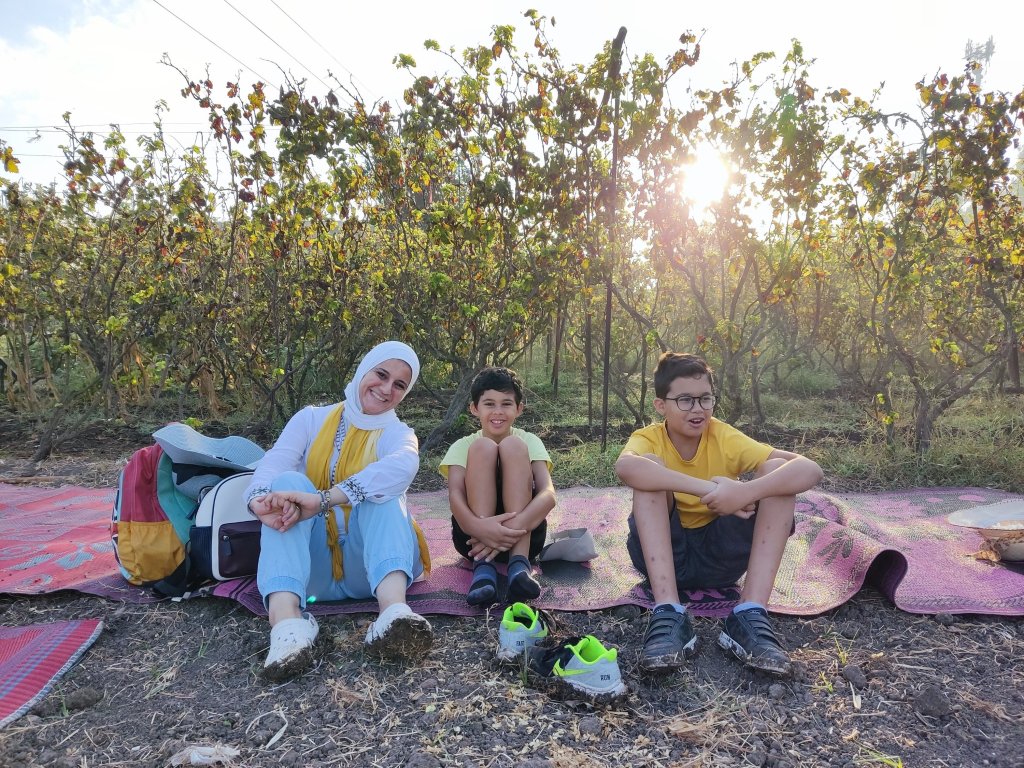
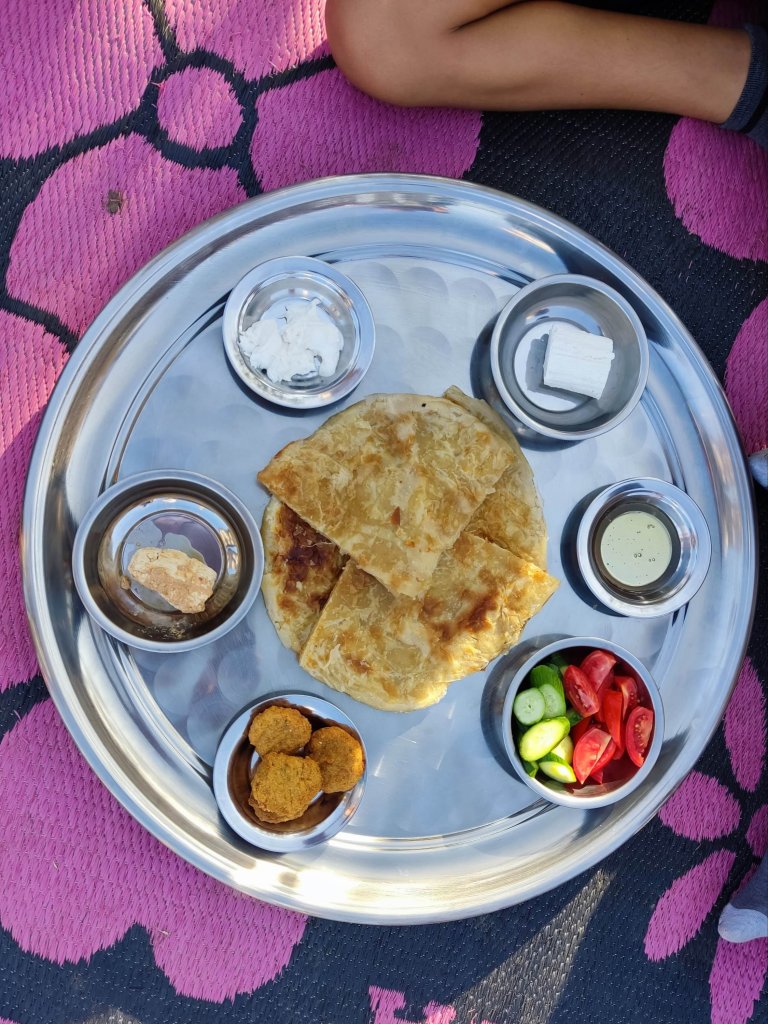
But money is not everything. After spending a few hours harvesting jasmine, we sat on the ground feasting on “fatir” (Egyptian crepes) with cheese, falafel, honey, fresh veggies and tea. I’d much rather be barefoot in the green fields and fresh air with my friends feeling Nature (maybe not that early in the morning), than in a factory or office staring at a screen, tapping on keyboards in neon lights. The “poor” farmers have many advantages that money can’t buy: community, Nature, family ties and, mentally, a healthier lifestyle. Money can only go so far in masking the damage of artificial environments.
#jasmine #jasmineabsolute #egypt #africa #shubrabaloula #jasminevillage #jasmineoil #niledelta #harvest #nature #perfume #cosmetics #pharma #industry #fatir #travel #travelstories #travelblog #travelphotography #naturelover






 Unconditional Love